
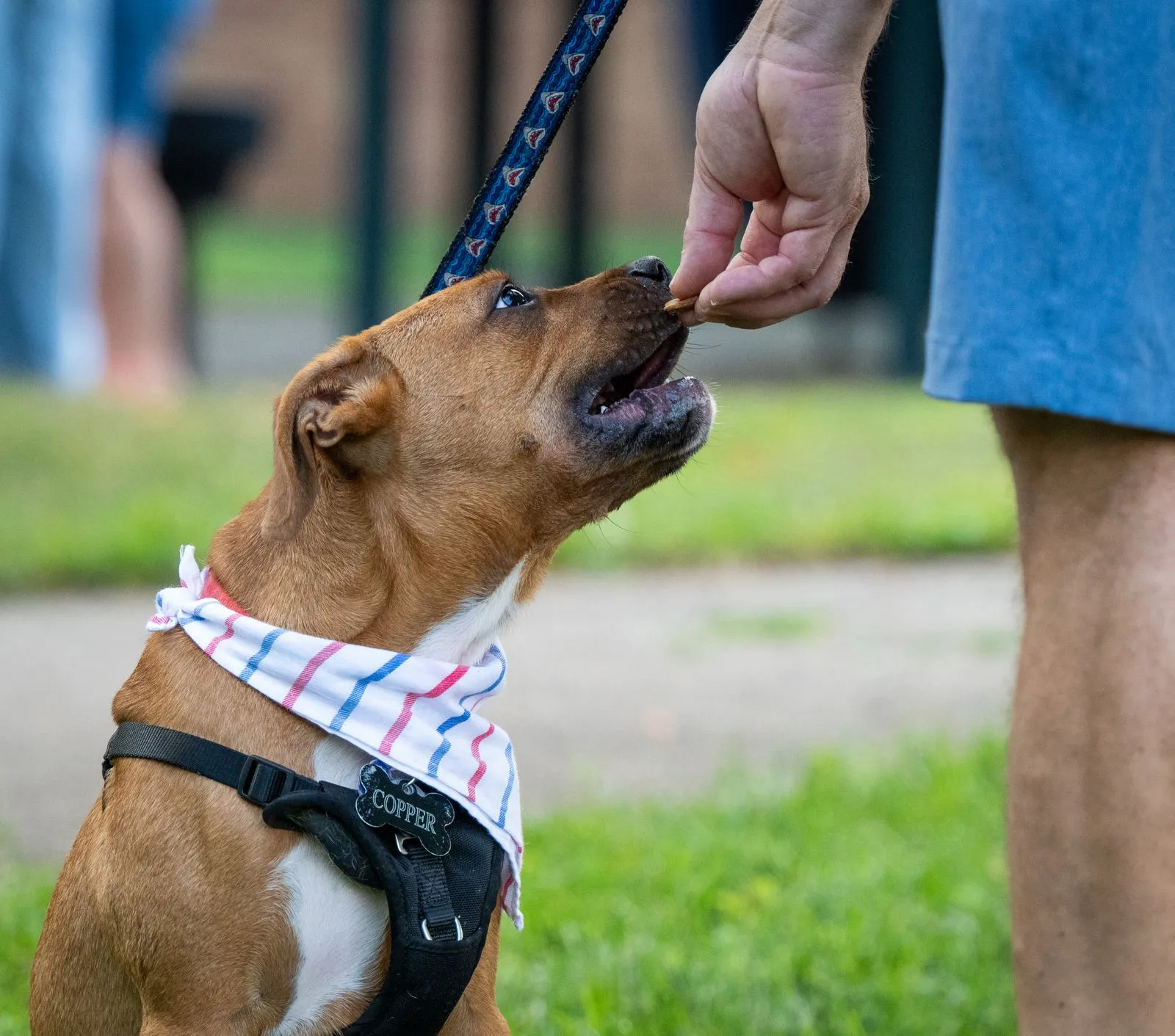
Rally obedience signs tell you what to do at each station while you guide your dog through a course. The signs may ask for a turn, a stop, a change of pace, or a specific position. Reading them accurately is only part of the task: you also need to plan your path and help your dog understand each cue. Learn the sign categories, walk the course before starting, and practice transitions so you can work as a steady team.
Recognize Common Sign Types
Directional signs ask for a turn, pivot, or change of direction. Common examples include left and right turns, about-turns, and changes in direction around a marker. Read the arrow or diagram before approaching the station, then decide which side your dog should remain on. Practice each turn at home with a clear verbal or hand cue, so your dog can follow your movement without crowding or cutting across your path.
Position signs call for actions such as sit, down, stand, or a transition between positions. Some stations combine several actions in sequence. Give each cue distinctly and allow your dog time to complete it before moving on. If a sign specifies a particular order, rehearse that order rather than relying on a general position-change routine. Consistent cues help your dog distinguish the requested behavior, especially when the course includes several stations close together.
Follow the Course Flow
Rally courses are completed in station order, usually following a marked path from the start to the finish. Before you begin, walk the course if the event permits. Locate each sign, note the direction of travel, and identify tight turns, nearby barriers, or stations that require a pause. Plan a route that gives your dog enough room to respond while keeping the next sign in view.
A station’s sign usually indicates the action to perform, but your approach and exit matter too. Avoid stopping so early that your dog cannot reach the station comfortably, and do not hurry away before the exercise is complete. Keep your attention on the sign and your dog, then move forward smoothly. If two stations appear close together, confirm which one comes next instead of guessing from their placement.
Prepare for Each Station
Practice individual signs in a quiet space before linking them into a course. Use a simple marker, such as a cone or card, to represent a station. Approach it at a normal walking pace, give the cue, reward the completed behavior, and continue. Start with one familiar sign, then add new actions as your dog becomes reliable. Short sessions help maintain focus and make it easier to spot which transition needs more practice.
When your dog understands the separate exercises, arrange several stations in a small practice course. Vary the order and direction so your dog learns to listen to your cues rather than anticipate the next action. Reward calm attention and accurate responses. If your dog misses a cue, reset the exercise at an easier distance or speed, then try again. Build toward the pace and distractions your dog will encounter at a trial.
Build Clear Handler Cues
Your body movement can support a cue, but it should not replace clear communication. Keep your shoulders and steps consistent, avoid turning abruptly before your dog is ready, and use the same words or hand signals during practice. Check that your dog can perform the behavior from both sides or in different directions when the course calls for it. If a cue only works in one setup, practice it in small variations.
Before a run, review the signs in order and mentally rehearse your route. Bring your dog to the start with enough time to settle, and use a familiar warm-up rather than teaching new behaviors at the last minute. During the course, focus on the current station instead of worrying about the whole sequence. If you lose your place, pause safely and check the next sign before continuing.
Reading rally signs becomes easier when you know the action, plan your route, and practice each station as a clear cue-and-response. Start with individual exercises, then connect them into a short course with varied turns and transitions. For structured practice and guidance, contact Annapolis Rally Training to ask about training options.